
Theatre Through the Ages: South East Brisbane Steiner School Students Shine on Stage
Updated: Sep 19
A school stage can do more than hold a performance. It can become ancient Greece, a silent Paris street, an enchanted forest, and a musical theatre chorus line, all in one show.
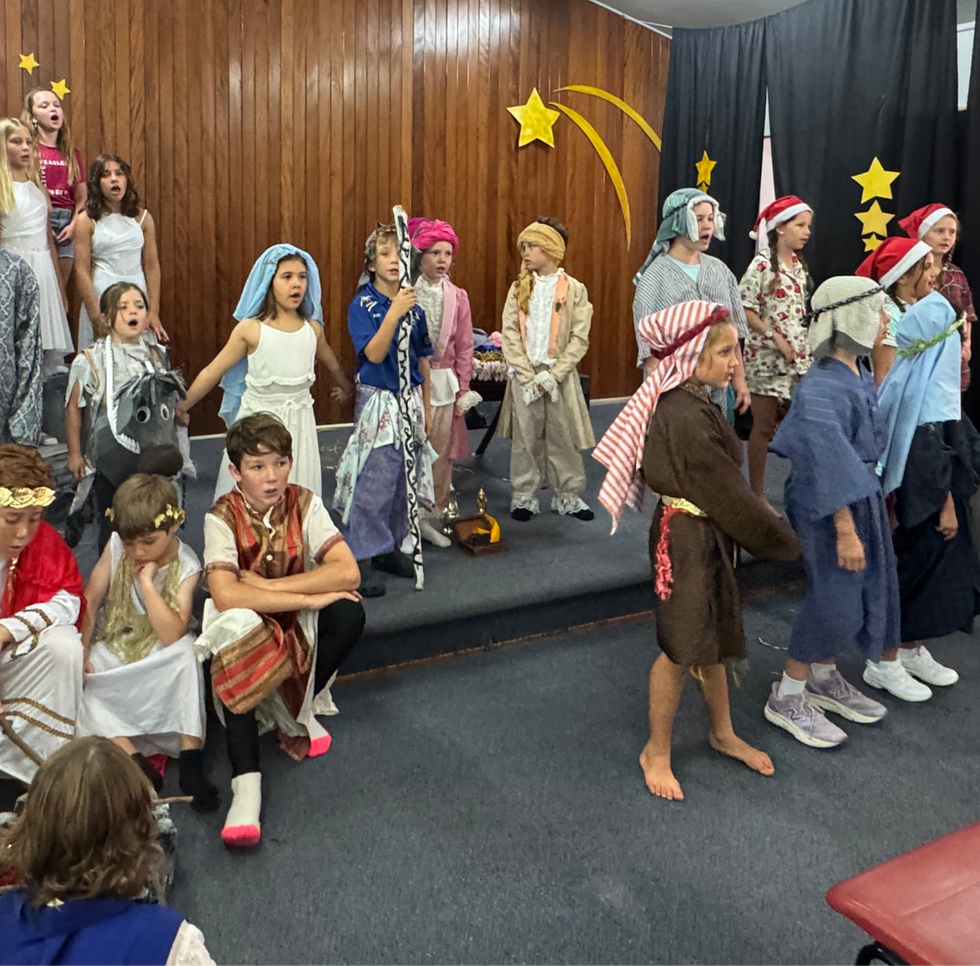
That was the spirit of Theatre Through the Ages, a Performing Arts production by South East Brisbane Steiner School students. The children took their work beyond the classroom, performing for schools and aged care audiences before sharing a final show with the whole school community.
The result was more than a show that entertained. It was a celebration of courage, creativity, memory, movement, and the joy that grows through performing.

Students travelled through theatre history
The production gave students a chance to explore performance styles from across centuries. Rather than focusing on one play or one genre, Theatre Through the Ages moved through a series of vignettes, each with its own style, rhythm, and challenge.
The show included scenes and performance pieces inspired by:
Greek pantomime: Pandora's Box
French mime
Shakespeare’s A Midsummer Night’s Dream
Musical theatre excerpts from Oliver, The Sound of Music, Cats and Joseph and His Amazing Technicolour Dreamcoat.
This mix asked a lot from the students. Greek pantomime called for strong physical storytelling. French mime required control, stillness, timing, and clear facial expression. Shakespeare invited students into rich language, imagination, and character. The musical numbers asked them to sing, dance, listen, and move together.
Each section offered a different way to communicate. Sometimes the children used words. Sometimes they used only their bodies. Sometimes they worked as solo or duo performers, and sometimes they became part of a larger group scene.
That variety is what made the production feel alive. It showed students that theatre is not one single skill. It is voice, movement, memory, listening, teamwork, and presence.
Guided by teachers who built skill and confidence
The children prepared under the guidance of Jelli Productionz Miss Jenni and Miss Shelly, with musical production led by Miss Marilyn (Principal) and teachers. Their work helped shape a program that was both ambitious, creative and entertaining.
Learning a show like this takes patience and commitment. Students need time to read scripts, understand scenes, rehearse movement, practice songs, learn accents and repeat lines until they feel natural. They also need support when nerves appear, as they often do before stepping onto a stage.
Through rehearsals, the children learned to:
Recite lines with clarity and fit for the scene
Memorize poetry and scripts
Dance with confidence and timing
Sing as part of a choir
Use facial expressions to show emotion and purposeful movement to tell a story
Work as a team and respond to other performers on stage
These skills do not arrive all at once. They grow through repetition, gentle correction, and the shared energy of a cast working toward the same goal.

Performing for schools and aged care brought joy meaning to the work
One of the most special parts of the project was that students performed for different audiences, including schools and aged care communities.
That matters. A performance changes when children understand that their work can bring joy to someone else. They are no longer just remembering lines for themselves. They are offering a story, a song, a laugh, or a moment of connection.
For aged care audiences, familiar songs and theatrical moments can spark fond memories and delight, and many sang along. For school audiences, seeing peers on stage can make performance feel possible and inspiring. In both settings, the children had the chance to experience the generous exchange that live theatre creates.
The performers gave energy to the room, and the audience gave it back through attention, smiles, applause, and cheers of encouragement. The performing arts teach children that communication is not only about speaking. It is also about noticing, feeling, responding, and sharing space with others.
Students saw growth in themselves
After the performances, the children reflected on what they had gained. Their responses showed that the project had reached far beyond the final curtain. They spoke about growing in confidence. They became more aware of how to move on stage and how to show emotion through their faces and bodies. They also noticed improvement in literacy skills through reading, memorising, and reciting poetry and scripts.
Miss Marilyn explained that these are meaningful outcomes because they touch both creative and academic learning. The government approved Australian Steiner Curriculum Framework has six strands related to The Arts, identifying that rich learning happens in integrated and authentic ways; beyond the traditional discrete subject disciplines of reading, writing and arithmetic.
Reading a script builds fluency. Memorising lines strengthens focus and memory skills. Reciting poetry develops rhythm, pronunciation, and expression. Acting requires comprehension, because a performer must understand what a character wants and feels before bringing a scene to life.
Performance brings self-awareness and discipline as well as the ability to work as a team and add to the contributions of the troupe. Students learned to portray different emotions and tell a story through their movements; a raised eyebrow, a slow step, a turned shoulder, or a pause can speak clearly. That kind of physical awareness can help children feel more at home in themselves.
The stage gave students a place to practice courage and connection in a real and memorable way.

The final curtain call celebrated with the whole SEBSS community
The final performance for the South East Brisbane Steiner School community brought the project full circle. Families, teachers, classmates, and friends had the chance to see the students share their performance skills.
A school production depends on many hands. The performers stand in the spotlight, but behind them sit weeks of encouragement, rehearsal planning, music preparation, costume organisation, and quiet support. The final show was a chance to honour everyone involved.
For the children, it also became a memory that will last. They will remember the songs, the costumes, the nerves, the laughter, and the applause. They may remember a line or movement that once felt impossible to memorise, or a moment when they stepped forward and found their voice.
That is why productions like this matter. They give children proof that they can learn hard things and work with others. The children experienced the curriculum focus stewardship by sharing something creative, entertaining and beautiful to bring joy to the audience.

A performance worth celebrating
Theatre Through the Ages South East Brisbane Steiner Students Shine on Stage was more than a showcase of songs, scenes, and movement. It was a journey through performance history and a powerful learning experience for the children involved.
With the support of Miss Jenni, Miss Shelly, and Miss Marilyn and school teachers, the students learned to recite, memorise, dance, sing, and perform with growing confidence. They brought joy to audiences across the community and created memories that will stay with them long after the costumes are packed away.
Most of all, they showed what can happen when children are given the space, guidance, and imagination to step onto the stage and shine.
Congratulations to everyone involved who shone on the stage and sparkled behind the scenes.
'That's a wrap folks!'



Comments